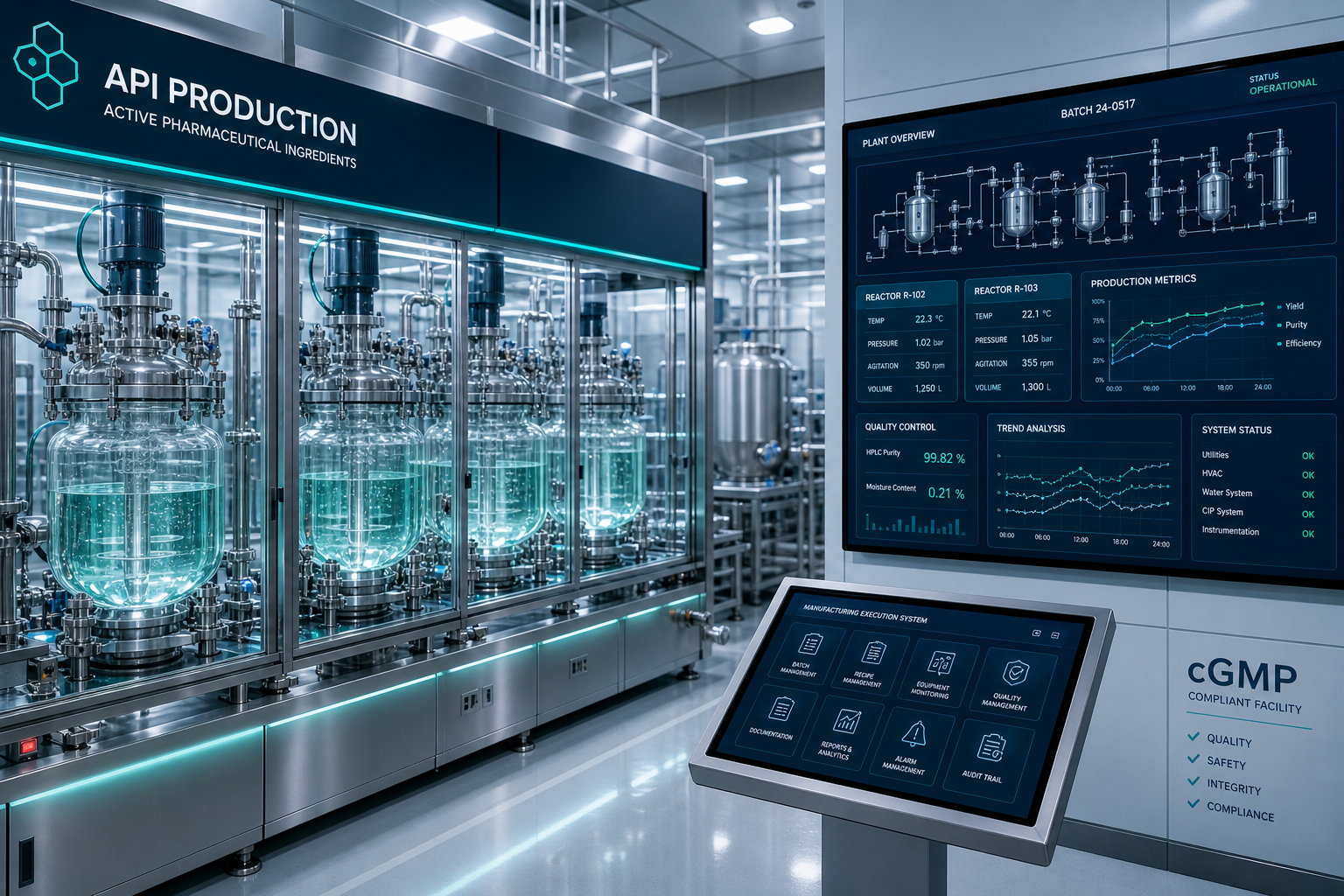
The global API landscape is shifting rapidly. Formulators expect shorter lead times, tighter impurity profiles, and documentation packages that satisfy multiple regulatory agencies from a single manufacturing site. For Indian bulk drug manufacturers, 2026 represents an inflection point — not because of scale alone, but because of how science, systems, and supply chain economics now intersect.
At Alexander Lifesciences, we see three defining trends shaping the next decade of API production:
- Process intensification — shorter synthetic routes with higher atom economy and fewer solvent turnovers.
- Digital quality systems — electronic batch records, trend analytics, and real-time in-process controls replacing reactive QC.
- Regulatory harmonisation — ICH Q7, Q9, and Q10 applied as an integrated quality framework rather than checkbox compliance.
Hyderabad continues to emerge as a hub where lean, technically focused manufacturers can compete not on volume alone, but on responsiveness and cost integrity. The winners will be companies that treat every batch as a data point — building knowledge that compounds across products and clients.
For pharmaceutical buyers evaluating new API partners, the question is no longer only "Can you make this molecule?" but "Can you make it consistently, document it completely, and adapt the process as specifications tighten?" That is the standard we are building toward at Alexander Lifesciences.